Toto-Rex, professional headshot TOTO‑REXTMAI Literacy · AI Compliance & Governance · Asia edition Newsletter
Singapore . China (mainland) . China (Hong Kong SAR) . India . Japan . AI compliance . regulation . the foundations

Understand AI.
No technical background needed.

"I told the chatbot I'm 66 million years old. It still asked me to verify my age."

Regional Chief-Dino, Asia

•
Latest News

Hot off the wire, worldwide

The archive Toto-Rex's Weekly Summary Big Tech AI desk

AI news from verified outlets across the globe. Asia first: SG, CN, HK, IN, JP.

Toto-Rex's monthly clippings . all the news that's fit to bite

The Cretaceous Courier

Asia

Law stated as at 3 November 2026; English prevails.

The latest news

Beijing says it will speed up AI legislation covering the whole life cycle, from data and computing power to deployment

At a briefing on 3 November 2026, Wang Ruomeng of the National Development and Reform Commission said China will accelerate legislation supporting AI's core inputs (data, computing power and algorithms), regulate key application scenarios, and set safety standards and ethical guidelines covering the full life cycle of AI. Developers and operators would be expected to strengthen risk management and disclose safety risks, incidents and vulnerabilities, with sector sandboxes and a transition period. No draft text, consultation or date was given. Reported by Bloomberg, via The Star, on 3 November; the NDRC's transcript was not read.

Read the report →
India
India's AI rules paper: not yet published
MeitY; PIB . checked 3 November 2026

The regulation-focused consultation paper that the minister promised on 8 October, to come within a month, had not appeared on the MeitY or PIB sites as at 3 November. On 26 October he said it would follow in the coming weeks. Status, not news.

China
A recommended standard on generative-AI compliance management was due to take effect on 1 November
National standards listings, GB/T 47863-2026 . 1 November 2026

GB/T 47863-2026, a compliance-management guide for providers of generative-AI services on the social impact of their applications, was listed with an implementation date of 1 November 2026. It is a recommended national standard: voluntary unless a rule makes it binding. Toto-Rex has read secondary listings, not the SAMR record.

Japan
Japan's window for reports on rules that impede AI closed on 30 October
Cabinet Office, Digital Agency, METI . 19 to 30 October 2026

The three ministries took reports until 30 October on rules that hold back AI, from large language models and agents to robots and autonomous driving. What they received feeds the revision of the AI Basic Plan; no summary has been published. Reported; no ministry page read.

Headlines link to their original outlets; the one-line gists are Toto-Rex's own. Curated 3 November 2026; check the source for the latest.

Last week's issue, 22 to 28 October 2026, in the archive →

•
Events radar

Get in the room where AI happens

AI summits, conferences and seminars from credible hosts. Singapore, China, Hong Kong, India, Japan and online.

Featured event
SWITCH. Singapore Week of Innovation & Technology
Marina Bay Sands & venues citywide . October 2026 . passes from free community tiers

If you leave the study corner for one thing this year, make it this. SWITCH is Singapore's flagship innovation festival and the front door to the whole Asian tech scene; tens of thousands of founders, investors, researchers and regulators, government-backed and thoroughly international. AI runs through every hall, IMDA and the national AI programme use its stages for the announcements that become next year's frameworks, and it lands in the same city and season as the Singapore FinTech Festival; one trip, two summits.

Why this one, and why you can trust it: Toto-Rex took no fee, no ticket and no commission to name it; this is simply the most useful, most popular and most prestigious innovation gathering on the Asian calendar. Read on for the full radar below.

Official site & registration
Region:
Sort:

Dates, venues and prices change; check them out yourselves before you go. Anything free is marked.

•
Watch & listen

Voices from across the AI world

The archive Toto-Rex's Weekly Summary

Talks, interviews and podcasts; builders, regulators, researchers and critics, in their own words.

Clip of the day
Inside Asia's AI race
CNA . YouTube, verified channel . documentaries & explainers

Singapore's CNA covers the region's AI build-out better than anyone with a camera: the model labs of Hangzhou, the datacentres of Johor and Mumbai, the regulators writing the rulebooks; documentary-grade reporting, free on its verified channel, from the newsroom closest to the story.

Watch on CNA's channel
Conversations worth your time . podcasts & interviews with high-stakes AI players
The two guests every AI panel somehow ends up booking: Somebody, and Nobody.

These are external shows Toto-Rex rates. Links go to each show's official page; specific episodes come and go, so browse for the guest you want.

Introducing Toto-Rex

A dinosaur lost his job to an algorithm, so he set out to understand it: the rules, the regulations, and just enough of the technology to follow them. This edition follows Asia. Singapore, China, Hong Kong, India and Japan; in plain English, from credible sources. Serious about the learning. Less serious about himself.

Watch the music video: AI Fired Me

The newsletter is coming soon.

Toto-Rex at an office desk, giving a thumbs up, beside the words AI fired me

Toto-Rex™ - Ep. 1 ‘AI Fired Me.’ (Official Music Video) is now out!

Released on YouTube, 8 October 2026

The song Toto-Rex™ wrote about the day AI made him redundant. Under two minutes, lyrics on screen.

Watch on YouTube

Pressing play loads the video from YouTube. YouTube’s own privacy and cookie rules then apply.

Follow Toto-Rex:YouTubeLinkedInInstagramTikTok

Free one-page outlines for the AI at Work & Hiring Q&As →

Toto-Rex at a laptop showing the word REJECTED
How it started

The algorithm came for the job. So he decided to understand it.

No technical background. No shortcuts. Just one word, one rule, and one small victory at a time, written down so you can walk the same path without the late nights and cold coffee.

This is that path, tidied up and shared. Welcome in.

The shelf

Four folders, one tidy desk

Choose a folder to jump to its section; everything stays on the page.

The side rail and menus still reach everything; picking a link opens its folder for you.

Part I

Legal: the rules and who makes them

01
The AI & Compliance Briefing

The reading that matters, in plain English

The archive Toto-Rex's Weekly Summary

Each item summarised by Toto-Rex, linked to its original source. Asia first: Singapore, China, Hong Kong, India, Japan.

Sort:

Region:
Region:
Region:

How this works: every summary is Toto-Rex's own plain-English take, and each card links out to its original source so you can read it yourself. Nothing is reproduced here. Educational only, not legal advice: for your own situation, ask a suitably qualified professional.

Sources, scope & limitations

Scope. This briefing covers AI compliance, regulation and policy for Singapore, mainland China, Hong Kong, India and Japan, plus the regional work (ASEAN, the Hiroshima Process) that binds them together. The events radar (section 09, below) covers those five jurisdictions and online events from recognised hosts. It does not try to cover the US or Europe; the UK & EU edition does that.

Sources. Credible, verifiable sources only: the regulators themselves (IMDA, the PDPC, the CAC, the PCPD, MeitY, METI and the PPC), established international and Asian law firms, recognised legal press, and peer-reviewed academic journals. Every card links to its original source, whether official text, law-firm commentary or press report.

Depth & timeline. Summaries are short by design; what a thing is and why it matters, then off you go to the original. Current as of 4 November 2026. China's binding human-like AI Measures have applied since 15 July 2026, and the CAC's "Qinglang" AI clean-up campaign reported its second-phase results on 2 September; its separate AI-agent Opinions remain policy guidance without a commencement date; India's DPDP Rules phase in through 2027; Singapore's advisory guidelines on generative AI and personal data sit alongside the PDPA rather than replacing it.

Limitations. Toto-Rex is a dinosaur, not your lawyer. Summaries are his interpretation, they simplify, and much of this law is written in Chinese or Japanese; where an English summary and the official text differ, the official text prevails. Check the live source before you act, and take advice for your own circumstances.

02
Toto-Rex's Notes . explainers

Toto-Rex's notes, jurisdiction by jurisdiction

Real cases, real fines, one fictional lake; and your rights at every turn.

Pick a jurisdiction. Each opens with one featured overview Toto-Rex's plain-English summary of how that place governs AI; then at least ten notes on the real cases, fines and rules beneath it: what actually happened, what the rules say, what a company should never do, and what you can do about it. Every piece states its scope and links its sources, and none of it is legal advice.

Jurisdiction:

How to read these: the cases, fines and dates are real and each note links its sources so you can verify them yourself; please do. The lake, Nessie and Colin are entirely fictional, and clearly labelled as such. None of this is legal advice, and it does not create any professional relationship; for your own situation, consult your lawyers. Based on the sources as at 4 October 2026; the law moves quickly.

The research library behind these notes

The library. These notes are the public face of Toto-Rex's AI Compliance Library; at version 6.1.1, 187 research documents (about 115,000 words): twelve deep jurisdiction packs (UK, EU, US, Singapore, Hong Kong, mainland China, India, Japan, South Korea, Brazil, Canada, Russia), an EU-27 implementation matrix, a US 50-state & D.C. index, a wider regional atlas, and the policy and evidence templates beneath them. Research cut-off: 13 July 2026.

How it is sourced. The library cites 431 official sources, each recorded with its date. It is not reissued every time this page changes: anything added after its cut-off carries its own last-updated date.

What it is not. The library's own label applies here too: general information and customisable templates: not legal advice or certification. English is the controlling edition; official legal texts and their authoritative language versions prevail.

Regional expert dossiers · English source edition

Five Asia jurisdictions, in depth

Rights, duties, penalties, dated agendas, operational practice and cross-border reach.

Five expert dossiers most relevant to this edition are available here in compact English form. The interactive globe, all sixteen jurisdictions, treaties, comparative models and industry tracker remain in the Global edition.

Open the full Global atlas

Part II

Money: finance, business and compliance

03
The application desk

What the machines are doing this week

Fresh AI uses in the wild; and the rule that walks in behind each one.

Editor's note . featured focus
Agents at large: when the software starts doing
Toto-Rex . 4 November 2026 . the focus rotates with the front page

This week's front page is about Beijing's plan to legislate for the whole AI life cycle; the quieter story is the machines that feel like people, and the agents that act like staff. Since 15 July China's binding Measures for anthropomorphic AI interactive services have been in force: covered companion services must disclose the machine behind the voice and meet safeguards for dependency, minors and crisis signals, and the first three months have been about filings and interface changes rather than penalties. China's separate AI-agent Implementation Opinions were published on 8 May with no stated commencement date; they direct regulator-led filing, testing and defective-product recall measures for defined sensitive and key-industry scenarios under applicable law, not a general 15 July duty for all agents. Singapore answered the agent question months earlier with a voluntary framework. Toto-Rex's working rule travels across all five jurisdictions: give an agent the least access it needs, log every step it takes, and keep a human hand on anything that moves money or people. Autonomy transfers work. It never transfers responsibility.

T.R., from the study corner

How this note works: with each weekly issue Toto-Rex picks one focus from the front page (finance, health, agents, hiring) and writes its compliance angle in plain English. The focus rotates; the discipline doesn't. Educational only, never legal advice.

Assistants can complete multi-step tasks (browsing, form-filling, booking) through "computer use" controls. These actions can affect data, bookings or payments, so define the agent's permissions, the authority to act and meaningful human oversight before use. Governance guidance: Singapore's voluntary Model AI Governance Framework for Agentic AI recommends risk boundaries, clear human responsibilities and technical controls. China's agent Opinions direct regulators to use filing, testing and defective-product recall measures for defined sensitive and key-industry scenarios under applicable law, but do not create a general 15 July duty for all agents.

IMDA · the agentic framework

From radiology triage to national screening programmes, clinical AI is deployed and scaling across Asia's hospitals. The rule that follows: health ministries treat it as regulated medical technology. Singapore's MOH publishes dedicated AI-in-healthcare guidelines, and each jurisdiction's device regulator stands behind them.

MOH Singapore

Wuhan runs one of the world's largest driverless-taxi fleets, and more cities license services every quarter. The rule that follows: city-by-city pilot permits, safety-driver phase-outs, and liability rules that keep the operator; not the passenger; answerable.

Baidu Apollo · official site

From 15 July, covered services must disclose that users are interacting with AI, build anti-addiction safeguards, intervene on self-harm signals, and apply strict protections for minors. The Measures are limited to public services within mainland China that provide continuing emotional interaction; ordinary non-emotional assistants are expressly excluded. The rule that follows: classify the service before assuming this specialist rulebook applies, then check the other CAC regimes separately.

CAC · the Measures

Applications change weekly; the desk keeps only what is verifiably deployed, linked to its official source. Educational only; not legal advice, and never a product endorsement.

04
AI & finance

Where the money meets the machine

Markets, funding and the rules that referee them; refreshed with each issue.

Money story in focus
The AI capex wave breaks over Asia
TechCrunch . June 2026 . datacentres & infrastructure

Meta has signed its first AI datacentre deal in India with Reliance, planting hyperscale AI infrastructure on the subcontinent; while Johor, Batam and Japan's regional grids fill with the same concrete. The models make headlines; the buildings make balance sheets. For the region's regulators the questions follow the money: power, water, data residency, and who answers when the workloads are sovereign.

Read it on TechCrunch

Singapore's central bank wrote Asia's first AI-in-finance principles (FEAT, 2018), built the Veritas assessment methodology with the industry, and on 7 October 2026 issued formal Guidelines on AI Risk Management for banks, insurers and capital-markets firms, in effect from 7 October 2027. If you deploy AI in Singaporean finance, this is your rulebook's front door.

MAS · official site

The FREE-AI committee's 2025 report set the framework for responsible AI in Indian finance; the RBI's 2026 draft guidelines would harden it into supervisory expectations; model inventories, validation, human oversight and board accountability for banks and regulated lenders.

RBI · official site

Hong Kong's banking regulator pairs firm expectations; senior-management accountability, consumer-protection circulars, model risk management; with a generative-AI sandbox at Cyberport where banks trial use-cases under supervisory eyes. The SFC applies the same logic to licensed firms.

HKMA · official site

Asian exporters meet the EU AI Act the moment their systems or outputs reach European users: transparency duties since 2 August 2026, and after the Omnibus deferral high-risk obligations from 2 December 2027 for uses listed in Annex III and 2 August 2028 for AI in products covered by Annex I. The lesson for a Singapore fintech or an Indian SaaS firm is the same; the market decides which law applies.

EUR-Lex · the Act

Toto-Rex's standing reminder: this desk reports the money; it does not manage yours. Nothing here is investment, legal or tax advice: markets move faster than dinosaurs, so verify at the source and consult your own advisers.

05
The jurisdiction desk

Five rulebooks, one desk.

Six numbered desks; one per jurisdiction, plus the cross-border play; each expandable when you want the detail.

What this is: the working map of how each jurisdiction actually governs AI, in the order a product usually meets them; based on the official sources linked in each desk, as at 4 October 2026. Rules and dates change; the links are the truth. Educational only, not legal advice: for your own launch, brief counsel in each market.

Comparative analysis · Toto-Rex's read

How the five compare

One region, five philosophies; not five drafts of the same law. Read straight down: each line is one question, answered across all five jurisdictions.

  1. Is there a dedicated AI law? Among these five, only Japan has one; the AI Promotion Act (2025), and it carries no penalties. China governs through a binding chain of application-specific rules rather than one statute; Singapore, Hong Kong and India have each chosen, on purpose, to rely on frameworks and existing law instead of an AI Act.
  2. Hard law or soft? China is the hard case; file, label, enforce. Japan is soft by design (promotion first, no penalties). Singapore, Hong Kong and India sit in between: voluntary AI frameworks resting on a binding privacy law.
  3. File before you launch? China usually requires a security assessment and algorithm filing before a public GenAI service goes live; and it reaches services offered from abroad. The other four generally do not, though sector approvals (finance, health) still apply.
  4. What must be labelled? Synthetic content is mandatory to label in China (since September 2025) and India (2026); elsewhere it is handled through transparency duties and guidance. Export to the EU and its labelling duties have applied since 2 August 2026, with machine-readable marking of output from systems already on the market due by 2 December 2026; so build labelling once, for everyone.
  5. The privacy floor is always there: PDPA (Singapore), PIPL (China), PDPO (Hong Kong) and APPI (Japan) apply now; in India the DPDP Act's core duties apply from 13 May 2027. Different names, same gravity; each reaches AI training and deployment.
  6. Copyright cuts the other way: Japan is the most training-friendly (Article 30-4); India has no US-style fair use and is litigating it (ANI v OpenAI); the rest remain unsettled.

Toto-Rex's note: build one governance programme to the strictest common denominator. China's filings, the labels China and India now demand, and Singapore's insistence on a named accountable human; then trim it down per market. Never the other way around.

Beyond these five. South Korea's AI Basic Act (Asia's first comprehensive statute, in force January 2026), Taiwan and the wider ASEAN bloc are moving too. This edition holds to the five above by design.

  1. Know the desks: MDDI sets digital strategy, IMDA writes the frameworks and tools, the PDPC enforces the PDPA, MAS covers finance, CSA covers security, MOH covers health. No single AI Act; deliberately.
  2. The binding floor is the PDPA (2012): consent plus exceptions (including business improvement), breach notification, DNC rules; and fines up to 10% of Singapore turnover. The PDPC's AI advisory guidelines (2024) and its advisory guidelines on personal data in generative AI (final, 20 July 2026) explain how it reaches training data, scraping included.
  3. Read the Model AI Governance Frameworks: classic (2019/2020), generative (2024), and agentic (January 2026, updated May 2026, the world's first). Voluntary, but the region's buyers and regulators treat them as the reference answer.
  4. Test with the national toolkits: AI Verify for classic systems, Project Moonshot for LLM benchmarking and red-teaming; free, open source, and doubling as governance evidence.
  5. Add the sector layer: MAS FEAT principles and Veritas (finance, with formal AI-risk guidelines in consultation), CSA's Guidelines on Securing AI Systems, MOH's healthcare AI guidelines.

Toto-Rex's note: the agentic framework launched at Davos in January 2026 with a companion paper asking the question of the decade; who is legally responsible when an AI agent acts? Singapore publishes its homework; everyone else copies it.

  1. Learn the chain: algorithm recommendation rules (2022), deep synthesis rules (2023), generative AI Interim Measures (2023), labelling Measures (September 2025); and from 15 July 2026, the binding anthropomorphic-AI Measures. The separate AI-agent Implementation Opinions were published on 8 May 2026 with no stated commencement date. Paragraph 11 directs regulators to use filing, testing and defective-product recall measures for defined sensitive and key-industry scenarios under applicable law; it is not a general 15 July duty for all agents. Each application may also engage the earlier CAC-led filing, assessment and labelling regimes.
  2. Check whether you must file before launch: under Article 17 of the generative-AI measures, a public-facing service with public-opinion attributes or social-mobilisation capacity needs a security assessment and algorithm filing before going live; deep-synthesis rules, service registration and sector licences can add their own steps, and app stores check filing numbers. The measures cover services offered to the public in mainland China, including from abroad.
  3. Label synthetic content the way the rules divide it: since 1 September 2025, providers add machine-readable metadata to generated content and a visible label where it could mislead (such as synthetic voices, faces and scenes); platforms that distribute content check for labels, and users who publish must declare it. A provider may hand over a file without the visible label only at the user's request under Article 9, with the user's duties in the terms and records kept. The 2025–26 "Clear and Bright" campaigns removed thousands of non-compliant AI products.
  4. Mind the foundations: the PIPL (2021) for personal data and automated decisions, the Data Security Law for what may train and leave China, and the Cybersecurity Law; amended with AI provisions from 1 January 2026.
  5. Translations are your friend: the rules are law in Chinese; China Law Translate and the firm trackers keep reliable English versions.

Toto-Rex's note: a unified AI Law keeps being proposed and keeps being postponed; the spring 2026 line from state media was that conditions are "not yet ripe". The application-by-application chain is the system. Plan for it, not around it.

  1. The legal floor is the PDPO (Cap. 486): six data protection principles from 1996 that the PCPD applies to AI with modern energy; no AI statute, none currently planned.
  2. Adopt the PCPD's playbook: the AI Model Personal Data Protection Framework (June 2024) for buying, building and running AI; the employee GenAI checklist (March 2025) for the office policy. The regulator runs compliance-check rounds; "no policy" is the worst answer.
  3. In finance the bar is explicit: the FSTB policy statement (October 2024), HKMA GenAI circulars plus the Cyberport sandbox, and the SFC's November 2024 circular making senior management accountable for AI language models.
  4. Learn the Arup lesson: HK$200 million left on one deepfake video call in 2024. Out-of-band verification for payments is now standard Hong Kong hygiene; see Note no. 01 above.
  5. Watch the copyright file: the government consulted on an AI training exception in 2024 and reform is in progress; track it before you train on Hong Kong content.

Toto-Rex's note: Hong Kong regulates AI the way it regulates most things; existing law, sector regulators, and the strong suggestion that you would rather not be the example. The HK$1bn AI R&D Institute says the ambition is real.

  1. Start with the Governance Guidelines (MeitY, November 2025): seven principles, "Do No Harm", a techno-legal approach; and a clear decision not to write a standalone AI Act for now. New machinery: an AI Governance Group, expert committee and AI Safety Institute.
  2. Respect the SGI regime: the IT Amendment Rules 2026 make "synthetically generated information" a legal category; prominent labels or provenance metadata, platform traceability, and takedown of unlawful deepfakes within hours. Safe harbour depends on it.
  3. Diary the DPDP dates: the Act passed in 2023 and the Rules were notified on 13 November 2025; consent-manager registration starts on 13 November 2026 and the core duties apply from 13 May 2027; consent-first, with a Data Protection Board to answer to.
  4. In finance, follow the RBI: the FREE-AI framework (2025) and the 2026 draft guidelines on AI model governance for banks and regulated entities.
  5. Copyright is live: India has no US-style fair use: ANI v OpenAI in the Delhi High Court and the DPIIT working paper will decide what training means here. Price in licensing.

Toto-Rex's note: the India–AI Impact Summit in New Delhi (February 2026) put a Global-South stamp on the agenda; adoption and impact first, with the New Delhi Declaration to show for it. India writes rules with teeth where it hurts: impersonation, elections, money.

  1. Read the AI Promotion Act (May 2025) Japan's first AI statute, built to accelerate adoption: an AI Strategy Headquarters chaired by the Prime Minister, a national Basic Plan, duties to cooperate; and no penalties. The Cabinet AI hub carries it.
  2. Work the voluntary layer: the METI/MIC AI Guidelines for Business (v1.0 2024; current version 1.2, 31 March 2026); risk-based, agile, and what Japanese counterparties will expect you to have read.
  3. Say what gets in the way: from 19 to 30 October 2026 the Cabinet Office, the Digital Agency and METI take reports of laws, ordinances and directives that impede AI, from language models and agents to robots and autonomous driving; the answers feed the next revision of the AI Basic Plan.
  4. The hard edges: the APPI for personal data (the PPC's AI-era review is under way; watch for amendment), the FSA's paper for finance, and the Information Distribution Platform Act (2025) for takedowns.
  5. Copyright, carefully: Article 30-4 famously permits training where enjoyment isn't the purpose; but the Cultural Affairs guidance (2024) draws limits, and the Nikkei/Asahi/Yomiuri suits against Perplexity are testing exactly where outputs cross the line.
  6. Use the safety machinery: the Japan AI Safety Institute's evaluation and red-teaming guides, and the G7 Hiroshima Process code of conduct that Japan authored.

Toto-Rex's note: Tokyo's courts have settled one thing already. DABUS lost here too. An inventor must be human (Tokyo District Court 2024, upheld 2025). The machine does the work; a person signs the form.

  1. Does this market need a filing or assessment first? China: usually yes (security assessment + algorithm filing, extraterritorial). Everywhere else: generally no; but sector approvals (health, finance) still apply.
  2. What must be labelled? Synthetic content needs labels in China (since September 2025) and India (since 2026); the EU's transparency duties follow from 2 August 2026 if you export. Build labelling into the pipeline once.
  3. What is the lawful basis for the data; in and out? PDPA, PIPL, PDPO, DPDP and APPI all reach training and deployment; China and India add data-localisation and transfer rules. Document provenance now; every regulator eventually asks for the receipts.
  4. Who is the accountable human? Hong Kong finance wants a named senior owner; Singapore's frameworks demand human accountability for agents; China wants a filed responsible person. "The model did it" is nobody's defence.
  5. Which common ground can you reuse? The ASEAN Guide on AI Governance, the G7 Hiroshima code of conduct, the OECD principles and ISO/IEC 42001; one well-built governance programme maps onto all five regimes with local trim.

Toto-Rex's note: he keeps the five questions on one card above the desk. Asked before launch they are a checklist; asked after launch they are an incident report.

Tech founder's track

Building SaaS, a data platform or an AI product? Take the second route.

Why this matters. One product, five rulebooks, and the penalties are not theoretical. China's regulator fined Didi ¥8.03bn in 2022 for how it collected and handled personal data, and its 2026 "Qinglang" sweep removed 5.61 million AI-generated items and penalised 49,000 accounts; South Korea's commission fined Meta ₩21.6bn in 2024 for using sensitive data to target adverts and suspended DeepSeek's downloads in 2025 until its data flows were fixed; Singapore's PDPA carries fines of up to 10% of local turnover; India's new data law, once its core duties apply in May 2027, allows penalties of up to ₹250 crore for the most serious contraventions. Binding rules now attach to AI itself: China's labelling measures (since 1 September 2025) and anthropomorphic-AI measures (since 15 July 2026), Korea's AI Basic Act (in force since 22 January 2026, with MSIT's separately announced grace period of at least a year before fines), India's platform labelling rules (since February 2026). The six stops below are the programme that travels across all five markets.

  1. One register, five columns. For every AI feature: purpose, personal data in and out, the market it serves, the role you play there, the owner. The roles differ: Singapore's PDPA speaks of organisations and data intermediaries; China's PIPL of personal information handlers; Korea's AI Basic Act of AI business operators, with extra duties for "high-impact" AI in credit, healthcare, hiring and public services.
  2. Classify by consequence, as every regime does in substance: AI that scores, ranks or decides about people (lending, employment, education, essential services) carries the heaviest duties, from Korea's high-impact obligations to China's algorithm filing for recommendation and generative services.
  3. Check the territorial reach. China's PIPL and generative-AI measures reach services offered to the public in mainland China from anywhere; Korea's Act applies to conduct abroad that affects the Korean market or users (Article 4), and foreign operators above the decree's thresholds must also appoint a domestic representative (Article 36); India's DPDP Act covers processing outside India connected with offering goods or services to people in India.
  4. Decide where the model runs. Residency and localisation duties (China for important data and large volumes; India's sectoral rules for payments) are architecture decisions, cheaper on the whiteboard than in production.
  5. Keep it living. Quarterly review; Hong Kong's PCPD and Singapore's PDPC both expect an AI governance structure with named accountability, and both have published model frameworks to copy.

Toto-Rex's note: the column that matters is "who is answerable". If the answer is "the vendor", it is wrong in all five markets.

  1. Singapore. Consent plus exceptions (business improvement, legitimate interests, research). The PDPC's Advisory Guidelines on Use of Personal Data in Generative AI (20 July 2026) confirm the "publicly available" exception can cover training data, require an AI-specific notification when personal data is used to train a model, and expect access and correction requests to be handled in good faith even for trained models.
  2. China. The PIPL requires a lawful basis (usually separate consent for sensitive data and cross-border transfers), a personal information protection impact assessment for sensitive data, automated decision-making and transfers, and the generative-AI Interim Measures (15 August 2023) add training-data legality, labelling and a security assessment or algorithm filing for services with public-opinion attributes.
  3. Hong Kong. The PDPO's six Data Protection Principles apply to model training and use; the PCPD's Model Personal Data Protection Framework for AI (2024), its generative-AI checklist for employees (2025) and its agentic-AI guidance (2026) are the regulator's statement of what "reasonably practicable" steps look like.
  4. India. The DPDP Act 2023 applies in stages under the Rules notified on 13 November 2025: the Data Protection Board provisions at once, consent-manager registration from 13 November 2026, and the core duties (notices, consent, children's data with verifiable parental consent, security and breach notification) from 13 May 2027. Penalties reach ₹250 crore for the most serious contraventions. Personal data the person made public, or that someone was legally required to publish, is outside the Act; check whether a scraped dataset really qualifies, because other laws, licences and site terms still apply.
  5. Japan and Korea. Japan's APPI allows training on personal data within the stated purpose, with the Personal Information Protection Commission's 2023 warning to OpenAI as the reference point; Korea's PIPA requires consent or a listed basis, and the PIPC has fined Meta, Kakao and others for using data beyond what users were told.

Toto-Rex's note: "publicly available" is a defence in Singapore, a question in Hong Kong and India, and a filing in China. Same words, different weight.

  1. Design. Run a privacy impact assessment where the law names one: China's PIPL for sensitive data, automated decisions and transfers; Korea's AI Basic Act expects an impact assessment before high-impact AI is used; Singapore's PDPC expects a DPIA under its accountability guidance; Hong Kong's PCPD framework asks for a risk assessment before adoption. Decide the human-oversight model now.
  2. Build. Test for accuracy, bias and robustness and keep the evidence. Singapore's AI Verify toolkit and Project Moonshot are free, open-source and accepted by the regulator as governance evidence; Korea's enforcement decree expects documented risk management for high-impact systems.
  3. Launch. Check the duties for each country and service before release. Korea's Act is in force; the January 2026 MSIT announcement separately described a grace policy for investigations and penalties, including transparency duties.
  4. Operate. Monitor outputs, log decisions, re-assess on every model change, and keep a complaints channel. China's CAC runs enforcement campaigns against AI misuse (the Qinglang sweep of 2026 handled 2,400 sites and apps); Korea and Singapore both expect incident response plans that name a person.
  5. Exit. Retention and deletion schedules that reach training sets, embeddings and backups; the Singapore guidelines and Hong Kong's PDPO both expect data to go when its purpose does.

Toto-Rex's note: Record the duty, commencement and enforcement policy separately. Check current official sources before launch.

  1. China. The Measures for Labelling AI-Generated Content (in force 1 September 2025) require explicit labels users can see and implicit metadata labels in the file for text, image, audio, video and virtual scenes; the anthropomorphic-interaction Measures (15 July 2026) add disclosure that the user is talking to AI, dependency monitoring, self-harm intervention and minors' safeguards for emotional-companion services.
  2. Korea. Assess the required notice for each generated output. The ministry's January 2026 grace announcement also covered transparency enforcement; exceptional investigations for serious harm remained possible.
  3. India. The IT Rules amendments on synthetically generated information (February 2026) require platforms to label and to act on deepfakes, with liability turning on how quickly they do.
  4. Singapore and Hong Kong have no labelling statute but expect transparency: the PDPC's generative-AI guidelines ask for notices when personal data trains a model and when AI shapes decisions; the PCPD's framework asks for meaningful explanation of AI-assisted decisions.
  5. Japan. The AI Promotion Act (Act No. 53 of 2025) carries no penalties, but the Second AI Basic Plan (Cabinet decision, 14 July 2026) and the AI Guidelines for Business set the transparency expectations that sector regulators and courts will read against you.

Toto-Rex's note: if the same product ships to Shanghai, Seoul and Singapore, build the label once, to the strictest standard, and switch the wording by market.

  1. Know the clocks. Singapore: assess within 30 days, notify the PDPC within 3 calendar days of deciding a breach is notifiable; India: notify the Data Protection Board and affected individuals, with details within 72 hours under the 2025 Rules; Korea: PIPA notification within 72 hours; China: notify the regulator and individuals "immediately" with the measures taken; Hong Kong: no statutory duty yet, but the PCPD expects voluntary notification and investigates.
  2. Security proportionate to the data. China's Data Security Law and the MLPS grading scheme, Singapore's Cybersecurity Act for critical infrastructure, India's CERT-In six-hour incident reporting directions for covered entities: check which of these your customers will push into your contract.
  3. AI-specific controls belong in the programme: prompt injection, training-data poisoning, model extraction, and the permissions you give agents. Singapore's Cyber Security Agency and Hong Kong's PCPD both publish guidance on securing AI systems.
  4. Rehearse. The fines that stung most in the region followed breaches where the company could not say what it held: run the exercise before the incident.
  5. Insurance and contracts. Check that cyber cover reaches regulatory penalties where the law allows it, and that vendor contracts require notice within 24 to 72 hours.

Toto-Rex's note: five clocks, one runbook. The runbook says who calls whom, in which language, with which form.

  1. China. Three routes out: CAC security assessment, standard contract filing or certification, with the 2024 facilitation rules exempting smaller volumes; important data, and personal information held by critical-infrastructure operators, must be stored in China, and exporting them needs a CAC security assessment unless an exemption applies; some sector rules bar export altogether. Build the data map before the architecture, not after.
  2. Singapore, Hong Kong, India. Singapore's transfer limitation obligation requires comparable protection abroad (contracts, binding rules or consent); Hong Kong's section 33 is still not in force but the PCPD's recommended model clauses are market practice; India permits transfers except to countries the government blacklists, with sectoral localisation for payments and some financial data.
  3. Japan and Korea. Japan's APPI requires consent or an equivalent-protection assessment, with the EU and UK recognised as adequate; Korea's PIPA requires consent or a recognised safeguard, and the PIPC enforces (DeepSeek's app was suspended in 2025 over undisclosed transfers to China).
  4. Vendors and models. Contract for processing on your instructions, no training on your data without consent, residency, sub-processor approval, breach notice and deletion; ask the model provider for the documentation you need to answer your own regulators.
  5. One architecture, many flags. Regional hosting in Singapore or Japan covers most of ASEAN and Northeast Asia; mainland China almost always needs a separate deployment and a local partner. Decide early; migrations are the expensive part.

Toto-Rex's note: the cheapest compliance decision in Asia is where the server sits. Make it before the first customer, not after the first complaint.

Find legal help for an AI decision: which expert, where to check them (55 official routes, 35 places), and a first-meeting card →
Founder's AI compliance file: what to decide and what to keep at every stage, from idea to exit →
Build and run AI with safeguards: cloud, APIs, retrieval, training, red-team and A/B tests, launch →

Penalties and cases that set the standard
WhoAuthority and datePenaltyWhat it was about
Didi GlobalCAC (China), July 2022¥8.03bnUnlawful collection and handling of personal data and national security review failures.
MetaPIPC (Korea), November 2024₩21.6bnSensitive data (beliefs, sexual orientation) used for advertising without a lawful basis.
KakaoPIPC (Korea), May 2024₩15.1bnSecurity failings that exposed KakaoTalk users' data.
DeepSeekPIPC (Korea), February 2025App downloads suspendedUndisclosed transfers of user data to China; relaunch after corrections.
OpenAIPPC (Japan), June 2023Formal warningCollection of sensitive data for training without consent; notices in Japanese required.
SingHealth and IHiSPDPC (Singapore), January 2019S$1m combinedBreach of 1.5 million patient records; security failings.
AI-generated content sweepCAC (China), "Qinglang" 20265.61m items removed, 49,000 accounts penalisedAI-fabricated news, impersonation and harm to minors; 2,400 sites and apps dealt with.

Figures as announced by each authority; appeals may be pending. The pattern across the region: transfers, sensitive data, security and generated content.

How this desk is sourced

Sources. Every rule and date above links to its official source. IMDA, the PDPC, the CAC (with established English translations), the PCPD, MeitY and IndiaAI, Japan's Cabinet Office and METI; last updated 4 October 2026.

Scope. General business use of AI across Singapore, mainland China, China (Hong Kong SAR), India and Japan. Not covered: tax, employment, sector licensing, export controls, and anything bespoke to your situation.

Limitations. Toto-Rex is a dinosaur, not your lawyer; and much of this law is written in Chinese or Japanese, so summaries simplify and translations can lag. Always check the linked source, and brief counsel in each market before you act.

One more time, because it matters: everything on this desk is education, not legal advice: laws change and your facts are yours alone. Consult your lawyers before you act. Toto-Rex will still be here when you get back.

06
The toolbox

Popular AI tools, by what they do

Toto-Rex wants to try them all. Forgive him; he's a dinosaur, picking it up bone by bone.

Grouped by job. Listings link to each tool's official site; none of it is paid placement, and most have a free tier.

07
Careers in AI

AI career paths and job boards, reviewed weekly

Where AI meets law, policy and product; straight from the boards that matter.

Region:
No. 1Policy & governanceAI policy & governance rolesSingapore public service · IMDA, PDPC & GovTech

The state that writes Asia's most-copied AI frameworks hires the people who write them; policy, standards, testing and the agentic-AI desk.

Singapore . hybridCareers@Gov
No. 2Privacy & data protectionDPO / Privacy Counsel, AsiaEvery multinational with a regional HQ

One desk, five regimes: PDPA, PIPL, PDPO, DPDP and the APPI. The IAPP's CIPP/A and AIGP are the badges recruiters search for.

SG / HK . hybridIAPP hub
No. 3FinanceAI risk & model governanceBanks, insurers & fintechs; and MAS itself

MAS, the HKMA and the RBI are all raising the bar on AI model risk; and every institution in scope is hiring the people to meet it.

SG / HK / MumbaiMAS careers
No. 4Research & frontier labsResearch, safety & policy at the labsAnthropic, OpenAI & peers. Tokyo & Singapore

The frontier labs now hire in Asia; alignment, policy and trust & safety alongside engineering, in Tokyo and Singapore offices.

Tokyo / SingaporeAnthropic careers
No. 5India's AI economyAI compliance in the GCCs & startupsIndiaAI Mission · global capability centres

India's IT majors and thousand-plus capability centres are standing up AI governance teams as the DPDP Act and deepfake rules land.

Bengaluru / Delhi / remoteIndiaAI Mission
No. 6The regulatorsThe referees are recruiting tooPCPD · IMDA · MeitY · and peers

Compliance checks, framework drafting, sandbox supervision; the region's regulators are staffing their AI desks. Public-service pay, front-row seat.

Hong Kong & regionPCPD · official site
No. 7China deskAlgorithm filing & platform AI compliancePlatform giants & top PRC firms

Every filing regime creates a profession: security assessments, algorithm registrations, labelling audits and content compliance for China's AI products.

Beijing / Shanghai / ShenzhenHan Kun · official site

Toto-Rex re-pins this board with each weekly issue from the official sources linked; postings, salaries and closing dates change daily, so always verify on the board itself. No placement fees, no affiliations; he just likes seeing dinosaurs employed.

Part III

Learning: skills, events and talks

08
Courses & qualifications

Courses by other providers

Degrees, certificates and short programmes from universities, professional bodies and tech firms. None is run by Toto-Rex.

Toto-Rex is not paid to feature any of these, and there are no affiliate links on this site. Listings point to each provider's official page; details, prices and dates change, so check before you enrol. Anything free is marked.

•
Toto-Rex originals

Learning, the Toto-Rex way

Short films, songs about AI and honest tool tests; serious learning, carried lightly.

Meet Toto-Rex . two short films
Swipe for more →
Songs about AI . and more to come
Swipe for more →
For real

What the most recent Toto-Rex team has studied

  • AI Governance (AIGP, IAPP)2025
  • Privacy Programme Management (CIPM, IAPP)2025
  • Data Protection (CIPP/E, IAPP)2025
  • Data Protection, Asia (CIPP/A, IAPP)2025
  • BCS Practitioner Certificate in Data Protection2025
  • Microsoft Azure AI Engineer (AI-102)2025
  • Microsoft Azure AI Fundamentals (AI-900)2025
  • Microsoft Power BI Data Analyst (PL-300)2025
  • AWS AI Practitioner (AIF-C01)2025
  • AWS Machine Learning2025
  • Google Cloud Generative AI2025
  • MIT Sloan, AI & Strategy2025

No technical degree here, and no rush; just one exam at a time. All the new AI can feel overwhelming, and a touch of FOMO is only natural, but once you know what you're aiming for, it's far easier to find your way through. Your pace, your path.

“Who says a T-rex can't reach their toes?” Toto-Rex, stretching

The newsletter

AI, explained for normal people.

A monthly-ish letter; he aims for once a month, study schedule permitting, and would rather skip an issue than send you filler. Toto-Rex writes it himself, between study sessions and waiting on deliveries. The developments that matter, what the new rules mean, and one tool worth a look. Plain English, no jargon, no commitment.

Sign-up opens soon.

Toto-Rex in a bowler hat raising a glass

Cheers. See you next month. Probably.

Part IV

The corner: Toto-Rex at play

Toto-Rex's Corner

The bit that will not help your career

Everything above is the serious stuff. This is the cherry on top: useless facts, small joys, and a dinosaur with opinions.

He told everyone the "T" in T-Rex stands for Technology. We both know it stands for Tyrannosaurus.

Swipe for more →
Dino of the day
Pachycephalosaurus

A 25 cm dome of solid bone on its head, evolved for headbutting rivals. And, Toto-Rex suspects, recruitment software.

Late Cretaceous . "thick-headed lizard"
Useless fact
200 million years

Roughly how long his lineage survived. He still cannot get a CV past an automated screening filter.

Evolution: undefeated. Recruitment: also undefeated.
Quote of the day
“I'm not behind. I'm pacing myself across 200 million years.”

A healthy attitude to a backlog, or a coping mechanism. Possibly both.

Toto-Rex, on his learning speed
Celebrity crush
Nessie's granddaughter

Of the Scottish Highlands. Also named Nessie, she runs a flourishing marketing company on the shores of Loch Ness; and is entirely out of his league, which, he notes, has never stopped anyone on a dating app.

Takes client calls from the loch. Her grandmother is very proud.
Love–hate relationship
The flying reptiles of South Kensington

Distant relations, technically. They hang about a certain museum looking down on everyone, and they haven't kept up with a single development since the Cretaceous. He visits anyway. Family is family.

They are not even dinosaurs. He has told them this. Repeatedly.
His dating profile
The way to my heartA tidy spreadsheet and properly cited sources.
Looking forSomeone who thinks resitting an exam shows commitment, not a red flag.

•
Before you go

AI may take the job. It cannot take you.

The one thing on this site that is not negotiable.

A machine can draft, sort, total and summarise. It cannot care, keep a promise, own a mistake, or read a room. That part of the work was never in the job description. It was always you.

So learn the tools and mind the rules. Then bring what no model can produce: taste, judgement, kindness, and the nerve to ask the obvious question.

“Whatever the algorithm decides, you've got me, buddy.”

Toto-Rex

“The difference between AI and a person is that a person can feel pain. Then again, what would I know? I’m just a dino boy who eats fish.”

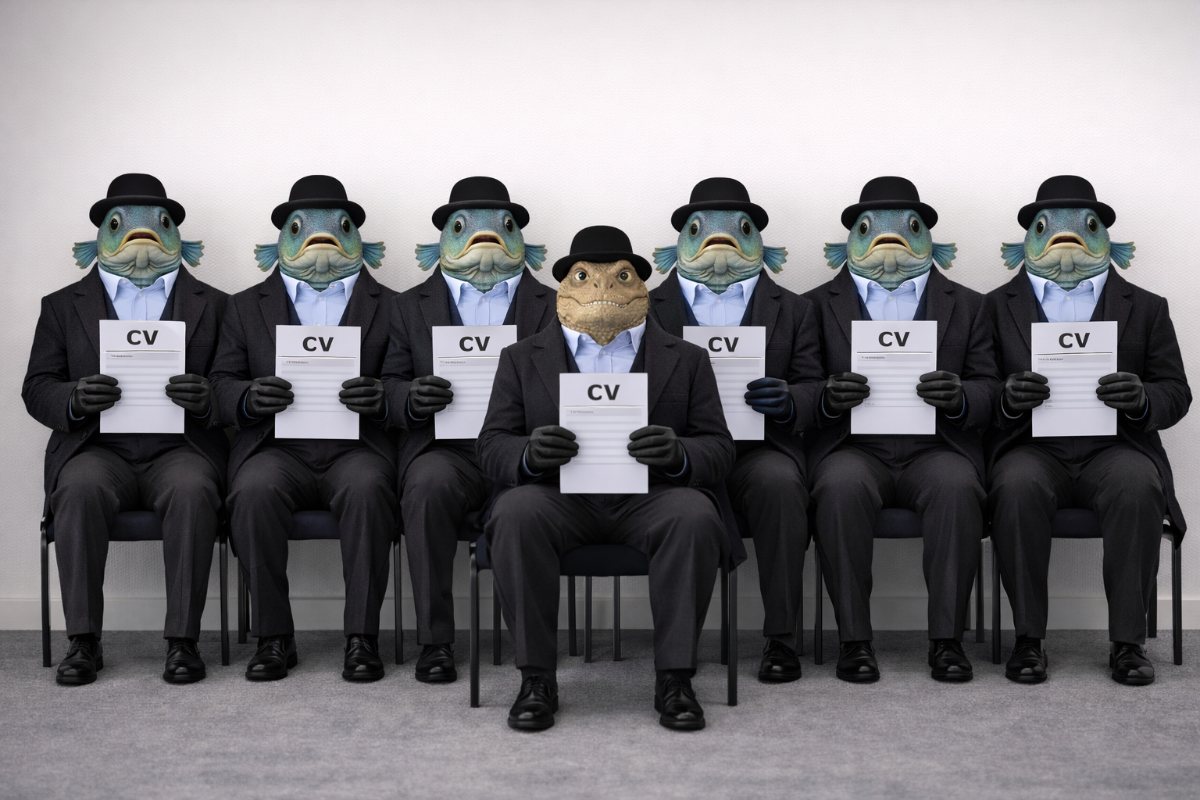
Toto-Rex holding his CV in a row of identical fish-headed candidates
Seven identical CVs. One original. Be the original.
•
Rex for relax

Fancy a game?

Step away from the syllabus. The dinosaur plays a patient game.

The Cretaceous Chess Club · established a very long time ago

Fancy a Game?

Your move.
Tap to dismiss
Toto-Rex . puzzles desk

The Daily Crossword

8–12 terms from the full glossary, refreshed daily. Ignore spaces and hyphens; letters only. Toto-Rex is watching. Supportively.

Across

    Down

      •
      Say hello

      Write to Toto-Rex

      He reads more than he lets on.

      Toto-Rex in his bowler hat and coat

      He may or may not read this. He is usually studying, or waiting on a delivery. But he reads more than he lets on, and he appreciates you stopping by.

      The postbox opens soon.

      •
      From the study corner to the shelf

      The book is coming

      Everything this site teaches, bound, sourced and indexed.

      Maqutt Publishing · London
      AI Compliance
      in the EU and UKAn Introduction
      EW
      Toto-Rex's neighbour
      IAPP AIGP · CIPM · CIPP/E · BCS PDP
      Microsoft Azure AI Engineer (AI-102) · AWS Machine Learning
      Google Cloud Generative AI · MIT Sloan, AI & Strategy

      AI has arrived faster than the law that governs it; and that gap is where careers, companies and rights are now won or lost. The book strips away the maths, the hype and the fear: the EU AI Act, the GDPR and UK data protection in plain English, built around a practical six-factor framework you can run on any AI system; five factors that follow its life, and a sixth you hold against them all. Written for founders, lawyers, educators, regulators and the professionally curious.

      • What AI actually is, and how it works, in plain English
      • The EU AI Act, the UK regime, and rulebooks from Brussels to Beijing
      • The GDPR, cybersecurity and the copyright fight
      • How the legal profession really uses AI today
      • The six-factor framework for assessing any AI system

      "A working machine asks: who answers for me?". Like everything in the study corner, the book is education, not legal advice. It sets out the law, cases, news and studies as at September 2026, reminds you to check them against the primary sources, and then tells you what the current situation is.

      Toto-Rex can make mistakes. Everything here is general information, not legal advice: check the primary source, and take advice from a qualified professional before you act.